
Key Questions: V-Door Safety and AI
What are the main HSE risks around the V-door?
The main risks include falls from height, line-of-fire exposure, unsafe material handling, and open-edge exposure.
Why do V-door incidents still happen even with barriers?
Barriers reduce risk, but they do not remove human factors such as complacency, overconfidence, poor awareness, or workers bypassing controls during routine operations.
How can AI reduce V-door risks on onshore rigs?
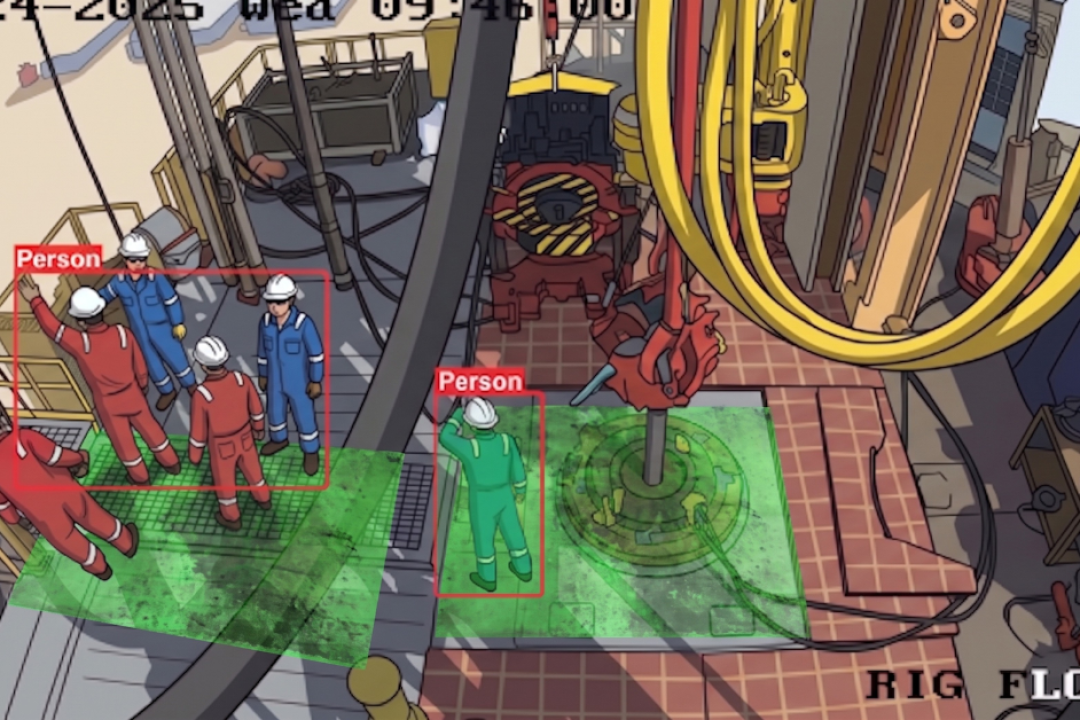
AI can monitor CCTV footage continuously and detect unsafe behaviors such as red-zone entry, standing too close to open V-doors, bypassing barriers, or unsafe positioning during pipe handling.
How does AI help HSE teams find hidden risks?
AI can monitor CCTV footage continuously and detect unsafe behaviors such as red-zone entry, standing too close to open V-doors, bypassing barriers, or unsafe positioning during pipe handling.
V-door incidents remain a critical safety concern on onshore drilling rigs. According to the IADC 2025 report, 7.5% of rig accidents involved falls across different levels, while 8% were related to material handling. Many of these exposures can occur around catwalk and V-door areas, where height, moving equipment, suspended loads, and operational complexity increase the potential for serious injury. Historical cases, including fatal falls through V-doors (BSEE Safety Alert No. 206; OISD/CS/2025-26/E&P/04), reinforce the need for proactive controls, continuous observation, and stronger field-level awareness. This article reviews the main V-door hazards, incorporates field insights from drilling professionals, and explains how AI-enabled HSE can support real-time alerts, data-driven visibility, and practical safety interventions.
Understanding the Risk
V-doors, which can range from approximately 3.5 to 9 meters high on onshore rigs, create significant fall and struck-by hazards, particularly during activities involving elevators, tongs, moving drill pipe, cat-line operations, and general material handling. Personnel working near an open V-door may be exposed to severe permanent injury or, in the worst case, fatal consequences.
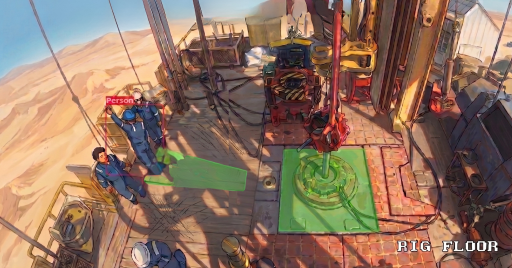
Even when barriers are in place, unsafe behaviors can still create exposure. Examples include leaning over the V-door to communicate with personnel below, standing in the red zone while the V-door is open, or entering the line of fire during pipe handling. These behaviors may appear routine in the moment, but they can quickly escalate into severe incidents, especially when they go unnoticed or unreported.
Varying Risk Levels Across Rigs
Risk levels differ from rig to rig. Newer rigs with smaller openings, improved guarding, and advanced barriers can reduce fall exposure. Older move-over rigs, especially those with larger openings or limited protection, can present much higher risk. Rig design, crew familiarity, operational setup, and the effectiveness of barriers all influence exposure.
Engineering controls are essential, but they cannot eliminate every risk. Behavioral compliance, clear procedures, and continuous observation remain critical, particularly during high-frequency tasks where crews may become used to the hazard.
Complacency and Overconfidence
Experienced personnel may underestimate hazards because they have worked around them for years without an incident. This familiarity can reduce alertness and normalize unsafe positioning near the V-door, especially when small deviations are not challenged or corrected.
The Green Hat Effect
Inexperienced workers, often referred to as “green hats,” may copy the behaviors of senior crew members without fully understanding the risk. When unsafe positioning becomes normalized, new personnel may interpret it as acceptable practice, increasing the likelihood of falls, struck-by events, or line-of-fire exposure near the V-door.
This is why proactive coaching, field observation, and real-time intervention are essential. Safety culture is shaped not only by procedures, but also by the behaviors that crews see repeated every day.
Hidden but Real Hazards
Many unsafe behaviors are never captured through manual observation, and near misses are often underreported. In one example from an older move-over rig using a rope as the V-door safety measure, a roughneck stood in the red zone between the tong and the V-door during an operation. He was struck, fell from the V-door to the ground, and sustained severe back injuries. Incidents like this show why systematic monitoring is needed to identify exposure before it becomes an injury.
How AI-Enabled HSE Strengthens V-Door Safety
When integrated with CCTV systems, AI-enabled HSE can enhance safety communication, operational visibility, and standardization by identifying unsafe behaviors as they happen and turning field activity into measurable safety intelligence. This does not replace engineering controls or HSE professionals; it strengthens them by revealing exposure that may otherwise remain hidden.
Why Veunex
Veunex: Revealing and Addressing V-Door Risks Faster
Many AI platforms collect drilling data but struggle to turn it into practical safety improvements. They often require expensive hardware, additional sensors, and complex installation.
VEUNEX transforms existing rig data into actionable HSE insights with minimal disruption. Already deployed across 150+ rigs, it helps teams identify risks, understand behaviors, and take faster action.
Compatible With Existing CCTV
VEUNEX works with existing rig cameras and CCTV systems — no replacement, extra hardware, or complex installation required. HSE teams can identify V-door risks with minimal infrastructure changes.
Supports Real-Time Intervention
VEUNEX detects unsafe situations around the V-door, including red-zone entry, unsafe positioning, and line-of-fire exposure. It supports alerts, notifications, and faster field responses.
Designed for Real Rig Conditions
VEUNEX adapts to different equipment, layouts, connectivity levels, and operational environments. It fits real field conditions across automated and manual rig operations.
Faster, Less Disruptive Implementation
VEUNEX integrates with existing cameras and HSE processes to reduce deployment complexity. It transforms CCTV data into real-time safety awareness and practical risk insights.
Revealing Hidden Behaviors
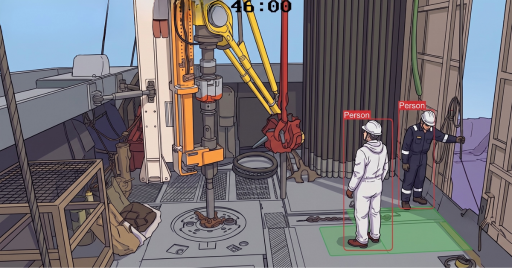
AI can detect unsafe actions that human observers often miss, such as standing too close to an open V-door, entering restricted zones, bypassing barriers, or remaining in the line of fire during pipe-handling activities. In two separate projects, AI-enabled HSE identified more than 40 instances in one project and more than 100 instances in another, each within a one-week period. These were behaviors that had not been fully observed by the HSE teams. The findings revealed the real scale of exposure and enabled targeted interventions based on evidence rather than assumptions.
Data-Driven Analysis
AI aggregates observations over time, helping HSE teams identify repeated behaviors, high-risk locations, peak exposure periods, and gaps in procedural compliance. This allows teams to prioritize interventions, refine procedures, improve barrier placement, and evaluate whether corrective actions are actually reducing risk.
Training and Awareness
Recorded incidents and AI-generated observations provide practical material for toolbox talks, scenario-based training, and crew coaching. Instead of relying only on generic reminders, HSE teams can use real examples from the rig to explain what happened, why it was unsafe, and how similar exposure can be prevented. This is especially valuable for both experienced crew members and new workers who are still learning safe positioning around the V-door.
Compliance and Oversight
AI can support oversight by monitoring procedural compliance, PPE use, restricted-zone entry, and gate or barrier status. This strengthens accountability and reduces reliance on intermittent supervision. More importantly, it gives HSE teams a consistent view of actual field behavior, making it easier to address recurring issues before they become normalized.
From Reactive Response to Predictive Prevention
By recognizing patterns, AI can flag potential high-risk scenarios, such as multiple crew members gathering near an open V-door during pipe handling or repeated red-zone entry during specific operations. These insights help shift HSE management from reacting after incidents to anticipating and preventing exposure before harm occurs.
Building a Stronger Safety Culture
AI-enabled monitoring supports a stronger safety culture by making hidden risks visible, reinforcing consistent standards, and helping teams focus on learning rather than blame. When management, HSE personnel, supervisors, drillers, and crew review the same evidence, conversations become more practical, aligned, and action-oriented. Over time, this shared visibility can help create unified safety practices across rigs and crews.
Final Insights on AI-Enabled V-Door Safety
V-door hazards remain a persistent threat on onshore rigs, particularly on older installations with larger openings, limited protection, or manual pipe-handling practices. Complacency, overconfidence, and inexperience can increase exposure even when barriers and procedures are in place. Combining AI-enabled HSE with engineering controls, administrative controls, field supervision, and continuous training gives teams stronger visibility into hidden risks and supports faster, more targeted intervention. The result is a safer workplace, better-informed crews, and a more proactive safety culture.
Note: This article was written by humans, with light support from GenAI tools. It combines professional HSE insight, field understanding, and responsible use of digital technology to share practical perspectives on AI-enabled safety.
The conversation continues
Field perspectives on V-Door risks
To deepen this discussion, several HSE professionals and drilling practitioners shared valuable field insights on V-Door-related risks and the potential role of AI in improving safety.
Risk normalization in daily operations
AI as a supportive layer for HSE
The importance of supervision, awareness, and design
Human judgment still remains essential
Recommended Reads
How AI Can Make Toolbox Talks More Impactful?
Toolbox Talks are essential to HSE routines, but they often lose impact when treated as routine checklists. This article explores how AI-driven tools like the
How AI Is Driving a Safer Future for Heavy Industries — Our Story with KAEFER
VEUNEX and KAEFER’s AI-integrated safety deployment improved HSE performance by 45%, strengthening real-time risk detection, team communication, and safer operations in a high-risk fabrication environment.
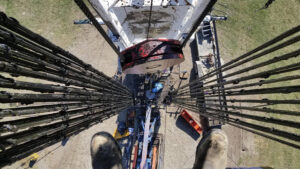
How does AI empower HSE teams to overcome Monkey Board challenges?
The latest IADC report shows the Monkey Board is one of the most dangerous places on a rig, with over 17% of incidents involving derrickmen.
3 Responses
Hi Roxana, thanks for your note and the well written blog. I feel you have covered all the expects and the possible ways to prevent. However, my personnel belief based on my own experiences is that while one can have the best of the solutions through Ai or any other mode, but if an idiot chooses to violate a safety requirement no amount of AI can prevent it. We need to make our systems ‘idiot proof’, then only can prevent an untoward incident. That’s my only input towards the entire discussion. if need be we can connect to discuss further.
Thank you for your honest feedback.
At VEUNEX, we fully agree that technology alone cannot replace strong safety culture and disciplined execution. AI is meant to support people by improving awareness, highlighting risks early, and helping teams act before situations escalate.
Appreciate your perspective.
Thank you for sharing your perspective — I really appreciate your honesty. I agree with you that no system or technology can replace strong safety culture and individual responsibility on site. From my side, I see AI more as a practical layer that helps people notice risks earlier and stay more aware, especially in fast-paced operations.
Appreciate your input and the discussion.